a newspaper man adjusts his pen
Showing posts with label Donora smog. Show all posts

Tuesday, November 22, 2011

Panic, condemnation and redemption follow the deadly 1948 Donora smog

Pollution from unsightly mills didn't stop Donora, Pa., from hosting elaborate downtown parades in the early-to-mid-1900s. (Donora Historical Society photo)


By Scott Beveridge

DONORA, Pa. – Nothing seemed out of the ordinary in smoggy Donora, Pa., the week before deadly air pollution would kill 19 people there in one day in late October 1948, and lead to more deaths in the coming days.

As Halloween approached Donora police Chief Pykosh issued an angry rant in the local newspaper after pranksters had scattered coal furnace ashes about town.

"Fun is fun, but when it becomes a downright nuisance, then it's time to get tough," Pykosh stated in The Herald-American before announcing the borough's Halloween parade would be postponed until Nov. 1 if the weather left it unfit for the march.

That Friday, Oct. 29, the newspaper appeared to have made no mention of the putrid air that had already begun to settle over the town along the Monongahela River Valley about 30 miles south of Pittsburgh. The Halloween parade went off as planned that weekend, even though fewer participants showed up because of the smoggy weather.

The dead were lining up by the end of the day Saturday, and two locals hospitals were overflowing with patients complaining about pneumonia or heart-related symptoms, the newspaper finally reported two days later.

On Monday, the newspaper announced borough council had called an emergency meeting the previous evening to call for an immediate survey of the problem by the U.S. Public Heath Service.

A panic had set in that Sunday, when a light rain had begun to clear the air. However, another fog began to roll in while the borough council meeting was underway, prompting fears it "would cause additional suffering," the newspaper article indicated.

Many people were already blaming the deadly air on the U.S. Steel zinc plant hugging the Mon River.

Charles Stacey, president of the local board of health, opened the council meeting with a strong indictment on the town's zinc and steel mills.

Stacey complained about reports the company had not modernized its mills since 1915, and he announced "it should go out of business" if the allegations were true.

Meanwhile local physician William Rongaus appeared at the meeting showing signs of fatigue and stress, and he "bluntly described the deaths of the 19 persons as murder."

"In my opinion," Dr. Rongaus declared. "I believe something should be done about smoke coming from the mills. The fumes are killers. They are silent killers."

Pittsburgh's health director, I. Hope Alexander, was by then warning of a pneumonia epidemic in Donora as a result of the smog.

"Right now the air in Donora has a heavy concentration of sulphuric acid plus some of the volatile compounds of zinc," Alexander stated in a Nov. 1, 1948, newspaper report by the United Press.

"The smoke from the zinc works at Donora is of a very toxic variety," he further warned borough residents.

The deadly smog story, though, had by the following Wednesday dropped off the local newspaper's front page above the fold - even though it had already made national headlines. Elsewhere the newspaper reported funeral rites would be held that day for three smog victims. Meanwhile, it also reported a North Carolina resort had offered an all-expense paid escape from Donora to fresh Southern air to 50 Donora residents.

Ironically, it only took the U.S. Health Department just five days from that deadly Saturday to declare the mills hadn't contributed to tragedy.

"There was no evidence found that will incriminate any one particular plant as being the source of the atmospheric contaminant over the weekend," Dr. Duncan W. Holaday of the health service's industrial hygiene division announced at a news conference in the borough on Nov. 4, 1948.

Holaday said there was no one in town that weekend to sample the air  when the smog was at its worst, and he also declared the air safe to breath after the resumption of mill production, the Donora newspaper reported.

Of course, we know more than five decades later that either Holaday had been misled or he was participating in a cover-up in the days after what became the nation's deadliest pollution event.

A 2008 review of federal court archives by the Observer-Reporter newspaper in Washington, Pa., uncovered evidence suggesting the company had taken air samples that weekend. However, the results of the internal testing of that air were never made public.

(This story is part of an continuing series of essays, "The Gamble on Donora Steel," which can be located along the right sidebar of this blog.)

Friday, August 12, 2011

Left in a cloud

Check out the humorous logo a couple police officers came up with in Donora, Pa., to put on T-shirts for the upcoming Donora Smog Run.


The 5K run/walk and 10K skate will be held Nov. 5.

Tuesday, April 21, 2009

New Donora smog show to premier


The former steel town of Donora continues to draw audiences to its infamous story about a mysterious, deadly fog.

A new documentary about the Pennsylvania smog tragedy is set to premier at 8 p.m. Thursday on WQED-TV in Pittsburgh.

Rumor of Blue Sky, produced by Pittsburgh filmmaker Andy Maietta, tells the Donora story entirely through the eyes of 25 local residents who survived the deadly smog of 1948.

“I’m glad we were able to capture their oral histories,” Maietta said Tuesday. “They are valuable to history. The story is told entirely through firsthand. There is no narrator.”

The story has many great sound bites, including one about birds dropping dead upon flying into the fumes at the open hearth. Another involves steelworkers suffering the zinc work jitters while toiling in that plant whose smoke greatly contributed to at least 20 deaths over a foggy Halloween weekend in 1948.

My only criticism about the film is that it almost entirely overlooks Webster, the downwind neighbor of Donora where four decades of pollution had killed most of the grass and trees.

There wouldn’t have been much of a Donora story without the constant complaining then from Webster residents about the sour air. Donora wanted the story to go away after the smog. Webster kept it in the news until clean air laws were enacted.

It took Maietta, a digital filmmaking instructor at the Art Institute of Pittsburgh, at least five years to complete the project, and many of the people he interviewed have since died.

The film is available for sale at the Donora Smog Museum, 595 McKean Ave., Donora.

Tuesday, March 3, 2009

Donora smog check-up


Donora smog checkup, originally uploaded by Scott Beveridge.

The Donora Smog Museum has expanded its hours to accommodate the growing number of people who want to get inside to see its collection.

It includes a great number of old photos that relate to American Steel and Wire Co.'s works in Donora, Pa., where a zinc mill helped to create a deadly smog in 1948.

The new hours at the 595 McKean Ave. museum are:

1 to 3 p.m. Monday
6 to 8 p.m. Tuesday
1 to 3 p.m. Thursday
11 a.m. to 3 p.m. Saturday

Monday, February 16, 2009

NPR to discuss the Donora smog, briefly


One member of the national media isn't bored of the Donora smog story that turned 60 in October.

NPR dispatched a freelance reporter to the borough last week to conduct interviews for a broadcast tentatively scheduled to air on Earth Day.

Ann Murray of Pittsburgh used the new Smog Museum in Donora as a backdrop to discuss the nation’s worst air pollution event with Charles Stacey, a retired superintendent who survived the deadly air. Elsewhere, she interviewed Devra Davis, a leading expert on cancer who grew up in Donora and has written and spoken often about the killer smog.

The public radio station joins every local newspaper, The New York Times and a laundry list of other national media outlets that have marked the smog’s anniversary in print. The Weather Channel also began airing an hour-long docudrama about the smog in November.

Maybe editors and producers are taking another look at Donora because it became a catalyst for the nation’s first clean air laws, and there is a stronger case for problems associated with global warming. The struggling, decaying town is also a harsh reminder of the consequences of a decision by such a dominating industry as big steel to abandon a community it built.

NPR, though, is expected to give Donora just three minutes on its award-winning program, “This American Life,” from 4 to 6 p.m. April 22. It will be streaming, too, on Web.

(That's the Donora Smog Museum in the photo)

Sunday, December 28, 2008

A new glimpse into the Donora story


August Chambon, the mayor of Donora, Pa., during the infamous smog of 1948, said he expected his borough to someday become a city.

But he couldn’t have been more wrong because the former steel town, today, is a third of its size six decades after it experienced the nation’s deadliest air pollution disaster. The smog is among the many reasons Donora’s mills became the first in a long line of these factories that permanently shut down in America from Philadelphia to Chicago.

Fortunately, for the sake of history, California University of Pennsylvania has preserved a tape recording of a short speech Chambon gave the year of the smog. It’s among a new digital file of old photos and other documents the university created on the rise of Donora and the smog that helped to bring about the nation’s first clean air laws.

The new exhibit has been assembled by Nick Roberts, a Cal U. instructional specialist who helps local schoolteachers gain access to the National Library of Congress' digital files in developing their lesson plans. Click here to sort through the new Donora files.

(The photo of the wire works at American Steel & Wire Co. in Donora, taken in July 1925, and the one of Chambon are courtesy of the Donora Historical Society and California University of Pennsylvania)

Tuesday, November 4, 2008

The original Donora smog service


A small service was held a year after more than 20 people died over two days in October 1948 from breathing zinc mill fumes that were trapped by stagnant weather in the Donora area.

Fewer than 50 people gathered in a Webster, Pa., schoolyard to commemorate the deaths in a service dominated by church hymns and prayer. Someone painted a memorial on a sheet of plywood containing 26 names of people whose deaths locals attributed to the smog. It the focal point for the audience that afternoon in this southwestern Pennsylvania village that was downwind of the smokestack pollution.

It’s a bit surprising that so few people came to recognize the casualties of America’s deadliest air pollution disaster. This was an area where more than 16,000 people lived at the time.

But then again, most of these folks depended on the culprit, American Steel and Wire Co. of New Jersey, for paychecks. And this service was sponsored by the newly formed Society for Better Living in Webster. The word was spreading that its members were urging folks to file federal lawsuits against the mill to put an end to the poisonous air they were breathing.

Dr. J. B. Laughrey of nearby Sutersville delivered the key speech, according to a type written program book covered with a black folder. I’m going to dig into some old newspaper files to find out more about the guy, and ask around to see if anyone knew what he said that day.

These photos are among of the papers of Allen Kline of Webster, who was a leading member of the society, talented newspaperman and local expert on the smog.

Thursday, October 30, 2008

Donora smog show released on Web


The Weather Channel is streaming online its new docudrama about the infamous Donora smog that killed more than 20 people in 1948.

Among those featured in the show is my mom, June, shown above, whose family lived directly downwind of steel and zinc mill pollution that likely caused disaster.

The premier airs at 9 p.m. Sunday. Check local listings to see when the show goes to repeats next week.

Friday, October 24, 2008

Devra Davis talks smog in Donora


DONORA, Pa. - Caskets occasionally washed to the street when heavy rain fell on a barren cemetery above a filthy zinc mill in southwestern Pennsylvania.

Decades of pollution from the Donora, Pa., mill's smokestacks had killed the vegetation at Gilmore Cemetery, including grass that would have protected its ground from erosion.

"It certainly was a testimony of what happened there when you couldn't get grass to grow on the ground over the graves," environmental scientist Devra Davis said, discussing the Donora smog of 1948 that killed 20 people and also was linked to the mill.

Davis, an author and native of Donora, made the remarks Monday while speaking in her hometown as the community commemorates the 60th anniversary of the nation's deadliest air pollution disaster.

"The funeral homes ran out of caskets," she told the crowd of local high school students and academics who attended the symposium at the borough building.

"The florists ran out of flowers for funerals," said Davis, director of the University of Pittsburgh Cancer Institute and a public health adviser to each U.S. president since Jimmy Carter.

While the exact nature of the smog never has been revealed by U.S. Steel or through the federal investigation, Davis said she has uncovered evidence that suggests at least one death was attributed to fluoride poisoning. An autopsy report that was recently uncovered indicates the victims had toxic levels of fluoride in their tissues.

The autopsy showed findings as if "someone had been hit by war gas," she said.

Steel mills generated large quantities of the chemical when the industry was booming, and some were facing millions of dollars in court claims involving alleged fluoride damages at the time of the smog.

Donora's smokestacks were not high enough to send their emissions over the steep valley hills, Davis said. The situation turned deadly over that Halloween weekend of 1948 when a large stagnant air mass trapped the mill gases over Donora and Webster, its downwind neighbor.

Most of the deaths occurred within a half-mile distance of the zinc mill. Another 600 residents were hospitalized before rain helped to wash away the fumes that Halloween afternoon.

Davis said it's important to get the bottom of the disaster that helped to spur the nation's clean air laws.

"'Donoras' are happening today in small areas of India and China," she said. "Why is Donora so important? We must warn those living in similar conditions today."

Observer-Reporter

Thursday, October 23, 2008

Thanking poor Donora for blue skies


DONORA, Pa. –While studying her lines for a play about Donora in 1948 when steel was booming, Destiney Gilmer was surprised to learn that times were not always tough in the struggling Pennsylvania borough.

“It’s hard to believe it was prosperous,” said Gilmer, a cast member in Ringgold High School’s new one-act play about the deadly Donora smog that killed at least 20 people about this time 60 years ago.

The high school brought the somber show to Donora Tuesday and Wednesday as residents there commemorate the disaster that became the catalyst for America’s clean air laws.

High school drama coach Leslie Rutherford wrote “We Know Blue: a 21st Century Thank You” at the request of the Donora Historical Society.

“There is pride that clean air started here,” Rutherford said after her play was well received in the Donora Municipal Building.

But the students “couldn’t wrap their minds around” the fact that 8,000 people were sickened by the smog when there are just 5,000 folks living in the borough today, she said. “They were amazed.”

The students took turns telling an abbreviated story about the smog and its legacy. They sang musical numbers from the era, including “Don’t Sit Under the Apple Tree.” They also pretended to tune into a corny live NBC radio broadcast of Fibber McGee and Molly”“ that entertained America about the time the smog settled over Donora.

There were 21 cast members, reflective of the unofficial number of people who died that Halloween weekend. Toward the end of the half-hour play, the students each lit a candle while announcing the victims’ names.

“It’s kind of hard to believe that that happened here,” student Leah Kramer said.

“And then it all fell apart,” her classmate, Brittany Recker, added.

Tuesday, October 21, 2008

Hip art in smog town


DONORA – The new Donora Smog Central used to be Central Pharmacy when the borough’s downtown saw better times.

So it didn’t take much work to alter the sign above the storefront entrance before the place reopened this week. It’s now become the headquarters for events surrounding the commemoration of the infamous Donora smog of late October 1948.

Students and staff in the art department at California University of Pennsylvania did an outstanding job of creating a hip art gallery in the old store at McKean Avenue and Fifth Street.

The artwork on the walls and floor relates in rather cool ways to the environmental movement that is rooted in this southwestern Pennsylvania town.

There is a giant robin’s nest made from grapevines resting near the shop window. the artist, Newt Berdine, named it "A Bird's Eye View," and it's yours for $350.

A large mural depicting the skeleton of a fish among molecules hangs on a back wall.

But some people in this old decaying steel town don’t seem to “get it,” said DeAnn Pavelko, who is on the smog events committee.

They probably never will.


(Note: This blog is loaded with Donora history, information that can be found through the search engine, top, left. Knock yourself out.)

Monday, October 20, 2008

Donora smog - the truth was concealed


By Scott Beveridge and Amanda Gillooly
Observer-Reporter

DONORA, Pa. - The day after a deadly smog cleared over Donora, the local newspaper lobbied for a full investigation into the poisonous air that had just killed 20 people.

"This pledge must be kept until it is redeemed by a true bill of health which Donora must now earn out of its tragedy," The Herald-American's front-page editorial stated Nov. 1, 1948.

Yet 60 years later, the exact cause of the death fog that spewed from the smokestacks at Donora's steel and zinc mills remains a mystery.

"We still don't know exactly what went wrong," said Devra Davis, a Donora native who directs the University of Pittsburgh Cancer Institute. "We never will."

The story, itself, has been downplayed and even ignored over the years by local residents who have long claimed that only the sick and old died before U.S. Steel's American Steel & Wire Co. slowed production to help clear out the fumes on Oct. 31, 1948.

But dusty stacks of court records buried for decades in the federal archives in Philadelphia show that the mysterious fog damaged the health and property of residents more severely than anyone knew at the time.

A random sampling of hundreds of pages of lawsuits spawned from the disaster shows the mill taking responsibility and paying settlements for the deaths and damages, and even the fatalities of livestock and fowl.

"It was not just a bunch of old, sick people dying," Davis said. "How did you become old by age 48 by living in Donora?"

A heavy fog settled over much of the Northeast in late October 1948, but Donora was the only area with heavy industry where unusual deaths were reported. The zinc mill, which reportedly functioned for some top-secret purpose, was the likely contributor to the toxic fumes, Davis said.

Uncontrollable coughing jags forced Halloween parade revelers to flee downtown Donora Friday, Oct. 29, 1948. Some felt dizzy; some felt shaky.

The next day, 11 people were dead.

Some suffered fatal heart attacks, while thousands of others became ill. That night, the roads were choked with traffic and a thick smog, making an evacuation impossible.

By Sunday morning, the death toll had risen to 19, and 600 people were hospitalized, prompting a mill attorney to order the cooling of the zinc smelters. A mild afternoon rain began to wash away the toxic fumes.

Scientists are now embracing a theory developed by former BBC journalist Christopher Bryson that may explain the arthritis symptoms and respiratory ailments that seemed to plague nearly everyone in Donora during its steelmaking days.

Bryson suggests high concentrations of fluoride from the mill's smokestacks caused the deadly smog, the nation's worst air pollution disaster. The chemical also could explain the disappearance of vegetation on the hillsides across the Monongahela River in Webster.

There were fatal levels of fluoride in tissue samples tested on one of the smog victims whose body was exhumed for a pathelogical diagnosis several months after the disaster, said Chris Neurath, research director of the Fluoride Action Network of Canton, N.Y. Those findings "just make the case stronger" for placing blame on the chemical for the problems in Donora, he said.

Steel mills added fluorspar to steel production at a time when fluoride was one of the unhealthiest air pollutants in the industry, Bryson wrote in his 2004 book, "The Fluoride Deception."

At the time of the smog, steel mills were facing lawsuits demanding millions of dollars in damages for exposure to fluoride. Bryson claims the U.S. Army and Atomic Energy Commission downplayed the fluoride poisonings because they were producing the chemical as a byproduct for atomic research.

In smaller doses, the chemical strengthens teeth, but prolonged exposure to fluoride pollution in the air can cause breathing difficulties, sore bones and blotchy, discolored teeth.

Anti-pollution crusader Philip Sadtler traveled to Donora shortly after the smog and took note of residents who had many of those same symptoms, Bryson's book indicates.

Sadtler, of Philadelphia, worked on behalf of Florida farmers who were blaming fluoride poisoning for their loss of crops and feared the Donora incident would be linked to sulfur dioxide as a cover-up. That type of pollution, although less toxic, was also being created in large quantities at houses in the Donora area where coal was burned for heat, Bryson's book indicates.

By December 1948, Chemical and Engineering News magazine published Sadtler's findings: There was high fluoride content in Donora's vegetation.

But the industry quickly disputed Sadtler's research through attacks by Robert Kehoe at Kettering Laboratory in Cincinnati, Ohio, and others involved in the steel trade, Bryson noted. Meanwhile, Kehoe was a leading chemical expert who was hired by U.S. Steel to investigate the smog.

The company possessed a string of reports on Donora air, information it kept close at hand, the court records indicate.

The attorney representing as many as 130 Donora-area smog victims petitioned U.S. Judge James Alger Fee Sept. 29, 1950, to force the New Jersey-based American Steel & Wire to produce those reports for the upcoming spring trial.

Marvin D. Power, the attorney who represented the victims, especially wanted the results of a key air sample taken in Donora at 6 a.m. Sunday, Oct. 31, 1948. The sample had been drawn when the company ordered the cooling of the zinc smelters.

A man identified only as Dr. Gibbs of Carnegie-Illinois Steel - a U.S. Steel subsidiary - was dispatched there under orders of Dr. Beebe, another of the company's air pollution experts.

Beebe later turned over a report on the findings to the U.S Public Health Service for its investigation of the smog.

But that report was never made public.

The health service's report noted Beebe's cooperation, "but there is not a word of Dr. Beebe's report in the government report," Power argued at the hearing.

Power also sought reports on air testing in Donora that was conducted several hours after the smelters were cooled. Those tests were completed by the Industrial Hygiene Foundation, an association that conducted research for the industry in Pittsburgh, the court indicates.

He further asked the court to produce air samples in Donora dating to 1935 that had been taken by Pittsburgh Testing Laboratories, an independent corporation. That company took other air samples in Donora during a mill flare-up in August 1948, the court record shows. The petition also asked Fee to order American Steel & Wire to produce reports that were forthcoming on air samplings taken months after the smog by Kettering.

The judge declined to rule from the bench but told American Steel & Wire attorney Charles E. Kenworthey that he might demand to read the air reports in his chambers to determine if they would be needed in court. Before adjourning, Fee said he also would consider ordering the reports to be produced at trial, if necessary.

The corporation reacted six months later by settling 130 lawsuits for $235,000, even though the victims had sought $4.6 million in damages, combined. These were victims who were facing extreme pressures from their neighbors to drop the lawsuits to keep the mill open.

The Public Health Service's preliminary investigation of 1949 placed most of the blame on stagnant air, and its files have since disappeared, Bryson noted. A final report was never issued by the federal government.

"The truth about what happened at Donora ... was concealed by the polluters," Bryson said.

(Caption: The infamous Donora zinc works, circa 1950. Photo courtesy of Donora Historical Society)

Sunday, October 19, 2008

Donora smog even claimed horses, cows


By Amanda Gillooly and Scott Beveridge
Observer-Reporter

John R. West hadn't missed a day of work for two years before he walked through his front door one Friday from his job at a local coal mine and said he just didn't feel well.

He told his wife he had chest and head pain, and worse, he couldn't breathe.

West, 56, wanted to lie down, but he couldn't catch his breath when he was horizontal. He tried sitting down instead, but air eluded him in that position, too.

So West did the only thing that provided him some comfort: He knelt down on the floor and had his family drop pillows around him. Dr. Norman Golomb came twice to his Sunnyside home near Donora - at a cost of $17 - and administered four shots.

Although Golomb wrote West a prescription, he wouldn't need it. West was dead by Sunday, Oct. 31, 1948, still in the kneeling position.

His demise was among 20 attributed to a thick smog that blanketed the valley that Halloween weekend in 1948 that has forever been linked to U.S. Steel's zinc mill in Donora.

West's story is among more than 100 that were told in the pages of smog lawsuits settled with U.S. Steel in 1951, only to be buried for decades in the federal archives.

The Observer-Reporter reviewed a random sampling of those files and discovered at least eight other deaths attributed to the smog that went uncounted 60 years ago.

John West was on that official roster, and his wife, Carrie, wasn't the only mourning widow to file suit against the mill operated by American Steel & Wire Co. of New Jersey, a subsidiary of U.S. Steel.

She demanded compensation for her late husband's future earnings (which totaled about $217 a month), reimbursement for his funeral costs ($345) and thousands of dollars in other damages.

The suit was settled for $4,500.

Despite their tales of woe, many of these lawsuits were dismissed because they were filed after the statute of limitations had passed.

Such was the case for Lena and James R. Jones. The couple lived on Book Street in the borough when Lena began suffering symptoms of asthma. She miscarried her 3-month-old fetus on Oct. 29, 1948 - the day the dense fog turned poisonous.

The family demanded $35,000. It got nothing.

But the scores of people who died or became sickened that weekend or shortly thereafter weren't the only victims of what has come to be known as the "Donora Disaster."

Droves of homeowners filed suit, claiming the air in their hometown prompted illness and property depreciation.

William R. Brown and his wife, Ruth, sought $35,000 from the steel company. William Brown told his attorney that his wife had become so ill that he was forced to relocate his family from the Vogel Apartments in Webster to nearby Monessen under a doctor's order.

The family settled the suit for $1,500.

The terrain suffered every bit as much damage. John and Anna Hreno of Webster knew. They filed suit against American Steel & Wire, claiming the air had sickened Anna, and turned their once-fertile land into an acidic wasteland that no longer produced trees, shrubs and vegetables.

Their complaint also noted that over a span of two years more than 150 of their chickens and ducks perished. Henry Graff, who lived in Gallatin, sought $35,000 for the deaths of eight colts and three cows and destruction to his crops.

The Hrenos sought $30,000, but they received nothing. They, too, had waited too long to file the suit.

Enough time has passed that the people of Donora deserve to know what was in the air that hovered over the mill, especially that Halloween weekend, said Dr. Charles Stacey, a retired Ringgold School District superintendent.

"I think there are still people in town who are descendants of people who died. I think they should have an explanation," said Stacey, 76, who was a senior at Donora High School during the smog.

He said school officials paraded boys into the health office to test their teeth and bones and submit a urine sample. No one ever told him the results of the tests or who ordered them.

For years, Stacey said, people in Donora believed that those who settled with the company did it for the money.

But after the attorney got his share, he said, they "just had enough money to buy a television."

"They didn't make out like bandits, not when you think of someone being deathly sick or dying."

While there are still unanswered questions, the "Donora Disaster" was a driving force behind the nation's first clean air laws.

That much, at least, is certain.


(CAPTIONS: L. Smith painted this scene, a the top, of the Donora steel mill for the cover of the womens club scrapbook 1948-49. Workers toil inside the infamous zinc smelters, circa 1920)

Wednesday, September 24, 2008

Donora smog video set to air


Jim and June Beveridge, originally uploaded by Scott Beveridge.

The Weather Channel is set to air its new documentary about the Donora smog on Sunday, Nov. 2, around the time of the 60th anniversary of the disaster in southwestern Pennsylvania that killed more than 20 people.

I’m expected to make my small-screen debut in the television show, “Killer Smog,” which is part of the network's series, “When Weather Changed History.” My mom, June Hart Beveridge, is a smog survivor who also will tell her story in the show about the nation’s deadliest air pollution event.

“The show looks great,” said Nara Walker, producer of the show for Towers Production in Chicago.

While in Donora to shoot the video in June, Walker recreated a football game between Donora and Monongahela that went on as schedule during the smog even though no one could see the action from the stands because of the thick smoke in the air.

The smog hovered over the borough for three days during a Halloween weekend in 1948, trapping deadly fumes from Donora’s steel and zinc mills in the Monongahela River valley. As many as 1,000 people were sickened and many of them filled the beds at two local hospitals before the fog lifted.

Check local TV listings for the time the show will be broadcast.

Click here for information on the upcoming Donora smog commemoration.

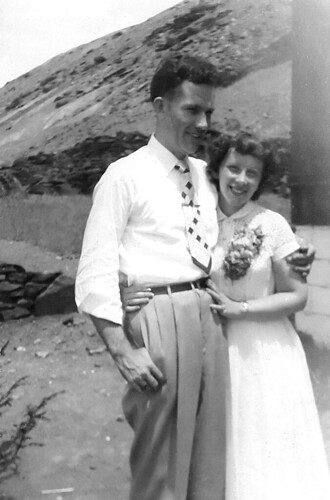
(Caption: June Beveridge is shown with her husband, Jim, posing for this photo about 1950 outside her home in Webster, Pa., where hillsides were stripped of their vegetation by air pollution from the nearby Donora mills.)

Wednesday, August 13, 2008

Free concert for the smog museum


Zakk Fine, right, and Bob Menzler of Rhyme and Reason play a free concert Tuesday to promote the new Donora Smog Museum in Donora. The museum dedicated to the nation's deadliest air pollution disaster is a work in progress and has yet to establish regular hours.

Click here for more information about the museum and the folks who are putting it together.

Tuesday, June 24, 2008

Smog show on horizon


DONORA – Devra Lee Davis never tires of talking about the Donora smog tragedy of 1948.

She used the story about that foggy weekend that trapped mill pollution in the deep valley for three days, killing 20 people, to introduce her critically acclaimed 2002 book, "When Smoke Ran Like Water."

The Donora native also has done countless interviews on the subject and was back in her hometown June 18 to tape a documentary about it for the Weather Channel.

"The story is more that they recognize the issue," Davis said before going on camera at a stage set in Donora Public Library to talk once more about the nation's deadliest air pollution disaster.

The Weather Channel is producing the show for its series, "When Weather Changed the World," because a stagnant weather pattern contributed to the smog that led to the nation's first clean-air law. It is expected to air in October during the 60th anniversary of the tragedy.

Many people have placed the blame for the smog, which also sent thousands of people to local hospitals, on the Donora zinc works.

Although the plant burned coal and mixed it with calcium chloride to produce zinc, the company also used it to produce alloys that were never made public. On the zinc end, the plant smokestacks released plumes of toxic fluoride gas that was strong enough to etch glass and damage the teeth of children and cow's hooves, Davis said.

"They did blame it on the weather, a perfect storm," she said. "We still don't know what went wrong. We never will."

The zinc mill closed in 1957, followed by the steel mill in the 1960s, giving Donora the distinction of having the first major steel mill to close in the United States.

The borough has been giving its blighted downtown a makeover for the smog commemoration. With the help of California University of Pennsylvania, giant reproductions of news photos from the event have been hung in abandoned downtown storefront windows. The commemoration committee also is developing a smog museum.

"This is a chance for Donora to step out of the gloom, the supposed stain that this had on the community, and commemorate those who passed," borough Councilman Don Pavelko said Wednesday.

He said the smog victims need to be credited for creating an awareness in America about the need for clean air.

"We're hoping this is the springboard to bring some pride back to the community."
(Caption: Devra Lee Davis, shown in Donora, is a professor in the department of epidemiology at the University of Pittsburgh)
Observer-Reporter

Tuesday, December 4, 2007

The smog revisted


DONORA, Pa. – Over the years, Donora Mayor John Lignelli would cringe every time a historian, filmmaker or student called him to discuss the borough's infamous killer smog.

"Let it die," Lignelli said, repeating the phrase he used when people asked about the event that killed at least 19 people in October 1948 and became known as the nation's worst air pollution disaster.

But as the smog approaches its 60th anniversary next year, he said, it's time that Donora recognizes the importance of keeping the story alive.

"That is history right now. That's why there is so much interest in it," he said, while discussing plans to mark the anniversary with some kind of ceremony.

The smog was blamed on stagnant air that hovered over the region for several days, trapping U.S. Steel smokestack emissions in the Monongahela River valley.

The smoke grew so thick over that Halloween weekend that hospitals became crowded with the thousands of people who became sick. Others died while gasping for air in what became the impetus for the first national clean air legislation of the 1960s.

Dr. Charles Stacey, a retired Ringgold School District superintendent, said he would like to hold a scientific seminar in Donora to discuss the effects the pollution had on health and the reasons for the smog.

"I think it could be a good thing," Stacey said Wednesday.

About 30 people from Donora and Webster, including Donora Councilman Don Pavelko, met two weeks ago to discuss the anniversary. The organizers were also soliciting interest in creating a clean air museum in Donora, Stacey said.

Stacey said he would like to invite Devra Davis, an author and environmentalist who was raised in Donora, to speak at the seminar. He also wants to videotape oral histories of local residents who survived the smog.

"I think they could do a good thing here if they get it together," Stacey said.
Observer-Reporter
(Caption: The U.S. Steel zinc works in a photo taken in Webster circa 1940)

Tuesday, June 12, 2007

Downtown deserted


Checking into the old Donora Hotel is impossible these days, as many of the buildings in this old steel town in Southwestern Pennsylvania see little, if any, traffic.
The stores began to close after the borough became home in the 1960s to the first major steel mill to be idled in the United States. Many mills would follow its lead, leaving behind a string of brownfields across the Pittsburgh region.
Donora’s furnaces began to dim after a 1948 smog lingered over this bend in the Monongahela River Valley for days, making history as the nation’s worst air pollution disaster. It paved the way for groundbreaking U.S. clean air legislation that made it more costly for steel giants to do business.
Now, at night, Donora's main drag looks akin to an episode of “The Twilight Zone.”

Thursday, March 29, 2007

Pool of memories


The infamous Donora zinc works, shown above in a photograph taken circa 1945 in Webster.

By Scott Beveridge

DONORA, Pa. – By some accounts, residents of Donora had begun to complain about a foul odor shortly after U.S. Steel Corp. opened a zinc mill in their neighborhood a century ago.
The mill superintendent, however, insisted that the air was safe to breathe, so the story goes. To prove his point, he moved his family, including an aging relative, into a mansion he had built on a hillside directly above the row of smokestacks.
Those living arrangements in 1916 didn’t last long. That same year, the company began construction of a plan of airtight, Prairie School blockhouses for its bosses on a hillside at the edge of town as far away from the mill as possible.
The plan of houses, where flowers bloomed and trees grew tall, became known as Cement City. There wasn’t a blade of grass, however, on the ground in the immediate vicinity of the mill. The hills were barren of trees, too, downwind and across the Monongahela River in the scrappy village of Webster. The vegetation was sacrificed for a top secret operation that forged metal plating with the strength to bulletproof U.S. military tanks.
The boss' stately, three-story brick mansion would be donated to Donora’s Spanish immigrant community, whose strong, young men had the right genetics to withstand the torturous heat while working beside the zinc smelters.
Donora would become infamous for a killer smog that was the impetus for the nation’s first clean air legislation in 1963. Stagnant air had trapped the mill's pollution in the deep valley town for three days in late October 1948. Twenty people died gasping for air and hundreds were sickened by the fumes, before rain moved in and allowed the pollution to dissipate. The event prompted physicians to publicly link air pollution to poor health for the first time.
Also in the 1960s, the Donora Spanish Club was home to the town’s only outdoor, exclusive swimming pool. My family, and our white Anglo-Saxon Protestant relatives, were proud to wear Spanish Club patches on our bathing suits. While I don’t remember anyone saying it out loud, the club had an unwritten rule then that blacks were not allowed in the pool.


Racism had nothing to do with keeping the water clean. I suffered many reoccurring inner-ear infections from spending too much time scavenger hunting on the bottom of the deep end of the pool.
Still, it was a safer alternative to swimming in the filthy, dead Monongahela. And the club’s bartender provided my father with beer on Sundays at a time when state law prohibited public bars from opening on the Sabbath.


Today, four decades after the mill shut down for good, there is a lush jungle on the Webster hillside. The river runs much cleaner now that the company, and many others like it that once dotted the region’s landscape, no longer dump acid byproducts directly into its water.
Somehow, the Spanish Club manages to stay open in harsh economic times in Donora. Although the big house on the hill looks badly in need of attention, the swimming pool should be open this summer. Last year, it was refreshing to see a few black children running around its lawn.